
Description
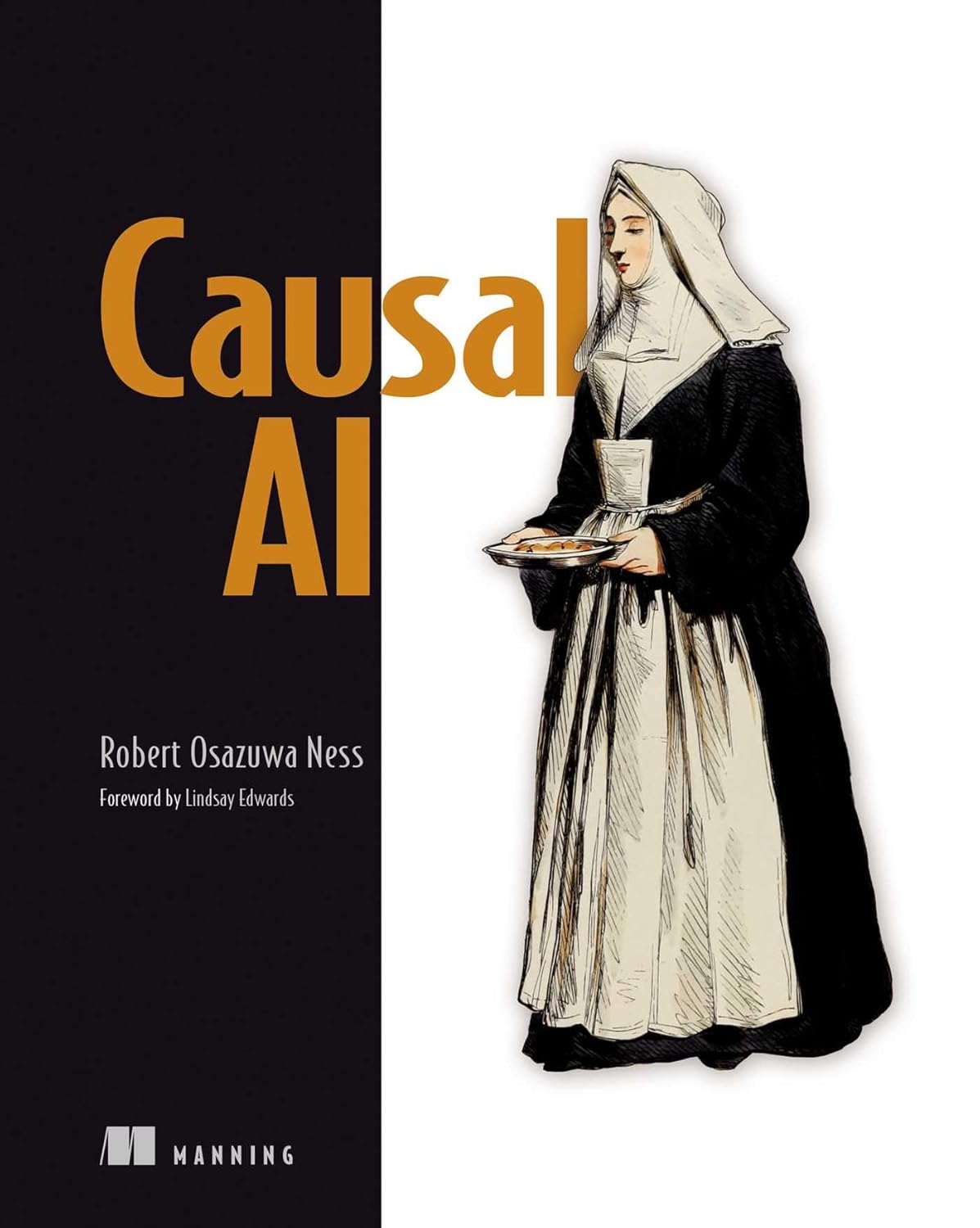
Build AI systems that understand cause and effect—not just patterns and correlations.
How can you predict what would happen if you made a different decision? How can you determine which actions will actually change an outcome? Causal AI provides a practical, hands-on introduction to building machine learning models that reason about causal relationships, enabling more accurate predictions, better decisions, and meaningful interventions.
Unlike traditional AI systems that identify correlations, causal AI helps answer deeper questions such as “Why did this happen?” and “What should we change to achieve a better result?” This book teaches you how to design AI models that can analyze cause and effect, generate explainable insights, and make more reliable decisions.
In Causal AI, you will learn how to:
- Build causal reinforcement learning algorithms.
- Apply causal inference using modern probabilistic tools such as PyTorch and Pyro.
- Understand the differences between statistical, econometric, and machine learning approaches to causal analysis.
- Develop algorithms for attribution, explanation, and credit assignment.
- Transform expert knowledge into interpretable and explainable causal models.
Written by Robert Osazuwa Ness, a leading causal AI researcher at Microsoft Research, this guide takes a practical, code-focused approach to concepts that are often hidden behind complex academic research. You’ll learn techniques that can be directly applied to real-world challenges, from creating explainable AI systems to predicting alternative outcomes through counterfactual reasoning.
About the technology
Traditional machine learning models are powerful at finding patterns but often cannot explain why something happened or determine which factors should be changed to influence future outcomes. Causal AI combines statistical methods, probabilistic modeling, and modern machine learning techniques to create systems capable of reasoning about interventions and cause-effect relationships.
About the book
This book introduces the essential tools, methods, and algorithms behind causal reasoning in artificial intelligence. Through practical Python examples, you’ll explore Bayesian approaches, causal inference frameworks, deep learning integrations, and advanced applications involving reinforcement learning and large language models.
You’ll work with powerful tools such as PyTorch, Pyro, DoWhy, and other machine learning libraries to build scalable causal AI solutions.
What’s inside:
- Complete causal inference workflows using DoWhy.
- Deep Bayesian causal generative AI models.
- A practical introduction to do-calculus and Pearl’s causal hierarchy.
- Methods for integrating causal reasoning into deep learning systems.
- Techniques for developing and fine-tuning causal large language models.
- Approaches for analyzing interventions, counterfactuals, and alternative outcomes.
Who this book is for:
This book is designed for data scientists, machine learning engineers, AI developers, and researchers who want to understand and implement causal reasoning in modern AI systems. Familiarity with Python and basic machine learning concepts is recommended.
Table of Contents:
Part 1: Foundations of Causal AI
- Why Causal AI Matters
- Introduction to Probabilistic Generative Modeling
Part 2: Building Causal Models
3. Creating Causal Graphical Models
4. Testing DAGs with Causal Constraints
5. Connecting Causality and Deep Learning
Part 3: Causal Reasoning and Inference
6. Structural Causal Models
7. Interventions and Causal Effects
8. Counterfactuals and Possible Worlds
9. General Algorithms for Counterfactual Inference
10. Identification and the Causal Hierarchy
Part 4: Practical Applications
11. Building Causal Inference Workflows
12. Causal Decision-Making and Reinforcement Learning
13. Causality and Large Language Models


Reviews
There are no reviews yet.