


Description
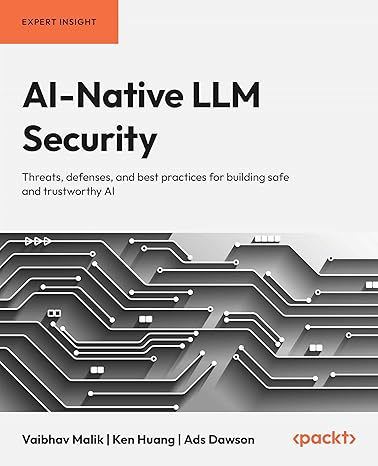
AI-Native LLM Security: Threats, defenses, and best practices for building safe and trustworthy AI.
Securing Artificial Intelligence: Protecting LLMs and Generative AI Systems Against Emerging Threats
Discover the essential strategies, frameworks, and security practices needed to protect modern AI applications. This comprehensive guide explores the biggest risks facing large language models (LLMs), generative AI systems, and machine learning applications, including insights based on the OWASP Top 10 for LLM Applications and the latest AI security approaches.
Build a Stronger Defense Against AI-Powered Threats
Artificial intelligence introduces powerful new capabilities—but it also creates new security challenges. Adversarial attacks, data manipulation, model vulnerabilities, and misuse of AI systems require organizations to rethink traditional cybersecurity approaches.
This practical resource helps cybersecurity professionals, AI engineers, and technology leaders understand how attackers exploit AI systems and how to build secure, trustworthy AI solutions from the ground up.
Rather than focusing only on theoretical risks, this book provides actionable guidance based on industry frameworks, security research, and real-world examples. Readers will learn how to apply secure-by-design principles, implement MLSecOps practices, and integrate security throughout the entire AI development lifecycle.
What You’ll Learn
- Understand the unique security challenges introduced by large language models and generative AI.
- Identify common AI vulnerabilities, attack methods, and adversarial techniques.
- Use threat modeling approaches to analyze and prioritize AI security risks.
- Apply security frameworks from organizations such as OWASP, NIST, and MITRE.
- Design secure LLM architectures using isolation techniques, access controls, and protective measures.
- Detect, investigate, and respond to security incidents involving AI applications.
- Secure AI systems throughout their lifecycle—from data collection and model development to deployment and operations.
- Implement continuous security practices through MLOps and MLSecOps workflows.
- Develop governance strategies that support responsible and compliant AI adoption.
- Address legal, ethical, and organizational challenges surrounding AI security.
Inside the Book
This guide covers:
- Fundamentals of large language models and generative AI systems.
- Methods for securing AI applications against modern threats.
- The relationship between inherent AI weaknesses and malicious attacks.
- Trust boundaries and security considerations in LLM architectures.
- Aligning AI security programs with business goals and regulatory requirements.
- Identifying and managing AI risks using OWASP-based methodologies.
- Detailed analysis of the top security risks affecting LLM applications.
- Practical mitigation strategies for reducing AI vulnerabilities.
Who This Book Is For
This book is designed for cybersecurity professionals, AI developers, machine learning engineers, security architects, data scientists, DevOps teams, and technology leaders responsible for creating or protecting AI-powered systems.
It is especially valuable for CISOs, engineering managers, and executives who need a deeper understanding of AI security risks and the best practices required to manage them effectively.
Readers should have a basic understanding of cybersecurity concepts and artificial intelligence fundamentals.
By the end of this book, you’ll have the knowledge and practical techniques needed to design, deploy, monitor, and secure AI systems with greater confidence—helping your organization build safer and more reliable artificial intelligence solutions.


Reviews
There are no reviews yet.