

Description
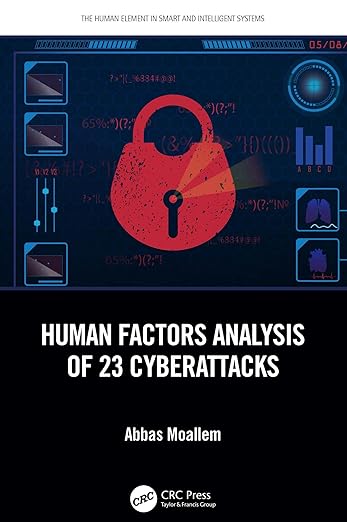
Human Factors Analysis of 23 Cyberattacks.
As cybercriminals continue to develop more advanced tactics, organizations around the world face an ever-growing wave of phishing campaigns, ransomware incidents, and large-scale data breaches. While technology plays a critical role in defending against these threats, human behavior often determines whether an attack succeeds or fails. Human Factors Analysis of 23 Cyberattacks explores this often-overlooked aspect of cybersecurity through detailed real-world case studies.
Rather than focusing solely on technical vulnerabilities, the book examines how human decisions, actions, and mistakes influence the outcome of cyber incidents. Drawing on expert reports and documented attacks, each chapter explains how a particular breach unfolded before analyzing the human factors that contributed to its success or failure.
Readers will gain insight into situations where people played a key role in initiating, detecting, responding to, or becoming victims of cyberattacks. By highlighting recurring patterns in human behavior, the book demonstrates how better awareness, decision-making, and organizational practices can strengthen overall cybersecurity.
Written in clear, accessible language with minimal technical complexity, this resource helps readers understand the relationship between people and cyber risk through practical examples and evidence-based analysis. It offers valuable lessons for preventing future attacks by addressing the human element alongside technological defenses.
Ideal for students, researchers, and professionals in cybersecurity, human factors, ergonomics, computer science, computer engineering, and industrial engineering, this book provides a practical perspective on one of the most important challenges in modern information security.


Reviews
There are no reviews yet.