

Description
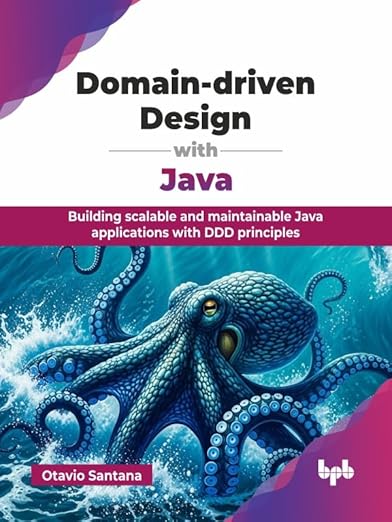
Master Domain-Driven Design and build software systems that align technology with real business needs.
Domain-Driven Design (DDD) has become a cornerstone of modern software architecture, helping development teams create systems that accurately represent complex business processes. By focusing on clear domain models, shared understanding, and effective collaboration between technical and business teams, DDD enables organizations to build software that is easier to maintain, evolve, and scale.
This practical guide takes you from the foundations of DDD to advanced enterprise applications. You’ll begin with essential concepts such as domain modeling, ubiquitous language, and the difference between strategic and tactical design. From there, the book explores powerful strategic techniques including bounded contexts, context mapping, and domain events.
You’ll also learn how to apply DDD principles in Java through practical implementations of entities, value objects, aggregates, domain services, and repositories. The book covers testing approaches, architectural validation with tools such as ArchUnit and jMolecules, and the application of DDD across microservices, monolithic systems, and distributed architectures.
You’ll discover how to combine DDD with Clean Architecture, design effective SQL and NoSQL data models, and integrate domain-driven approaches with modern Java ecosystems including Jakarta EE, Spring, Eclipse MicroProfile, and Quarkus.
By the end of this book, you’ll have the knowledge and confidence to design software that reflects real-world business domains, improves system flexibility, and delivers meaningful business value.
What you will learn:
- Apply Domain-Driven Design principles from strategic planning to tactical implementation.
- Design aggregates, entities, and value objects using Java.
- Use DDD effectively in monoliths, microservices, and distributed systems.
- Integrate DDD concepts with Spring and Jakarta EE frameworks.
- Combine DDD with Clean Architecture for maintainable software design.
- Create effective data models for both SQL and NoSQL environments.
- Use bounded contexts, context mapping, and domain events to improve architecture.
- Test and validate DDD implementations with unit testing, integration testing, ArchUnit, and jMolecules.
- Build modern reactive microservices using Quarkus and related extensions.
Who this book is for:
This book is designed for Java developers, backend engineers, software architects, and technical leaders who want to build scalable, maintainable enterprise systems. It is especially useful for professionals applying DDD principles in modern software projects and designing architectures that support long-term business growth.
Table of Contents:
- Introduction to Domain-Driven Design
- Strategic DDD Principles and Practices
- Tactical DDD Patterns in Java
- Testing and Validating Domain-Driven Applications
- Applying DDD to Microservices, Monoliths, and Distributed Systems
- Combining DDD with Clean Architecture
- Domain-Driven Data Modeling
- Enterprise Java Development with Jakarta EE
- Applying DDD with Spring Framework
- Eclipse MicroProfile and Domain-Driven Design
- Building DDD Applications with Quarkus
- Code Design Principles and Best Practices for DDD
- Final Thoughts and Practical Considerations


Reviews
There are no reviews yet.