


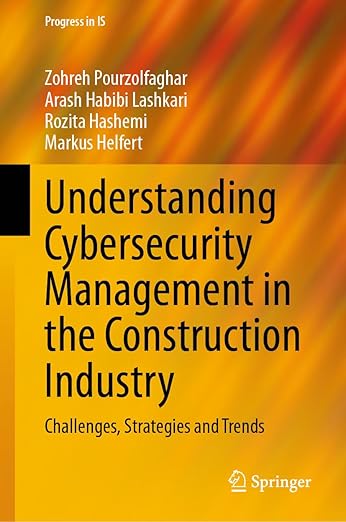
Description
As the construction industry becomes increasingly digital, protecting the vast amounts of information generated throughout a building’s lifecycle has become a critical challenge. This book provides a comprehensive exploration of digital information security in the built environment, examining how cybersecurity, privacy, and data protection have become essential components of modern construction and facility management.
Covering every major stage of a building project—from initial planning and architectural design to construction, commissioning, and long-term operation—the book examines how digital technologies are transforming the industry while introducing new security risks. It explains how the growing adoption of Building Information Modeling (BIM), cloud collaboration platforms, smart sensors, connected devices, and digital project management systems has improved efficiency, communication, and decision-making, while also creating new opportunities for cyber threats and data breaches.
A central focus of the book is understanding the vulnerabilities that arise throughout the digital construction process. Readers will gain insight into the types of cyber risks that affect project stakeholders, how sensitive information can be compromised, and the potential consequences of security failures for organizations, infrastructure, and building occupants. The book also presents practical mitigation strategies and security best practices that can help reduce these risks and improve the resilience of digital construction ecosystems.
Beyond project workflows, the book examines the technologies and software platforms that support digital transformation across the construction sector. It evaluates widely used digital tools from an information security perspective, considering their strengths, limitations, and potential vulnerabilities. Particular attention is given to protecting sensitive project data while maintaining efficient collaboration among architects, engineers, contractors, owners, and facility managers.
The discussion also extends to residential environments, exploring the growing adoption of smart home technologies and connected security devices. The book reviews existing household security platforms, assessing their effectiveness, affordability, usability, and long-term practicality for homeowners and building operators. It highlights both the benefits and challenges of integrating connected technologies into modern living spaces while maintaining strong privacy and cybersecurity protections.
In its concluding chapters, the book addresses the unique security challenges associated with large and complex buildings, including commercial facilities, smart buildings, and critical infrastructure. It evaluates the applicability of current cybersecurity solutions, identifies gaps in existing approaches, and discusses emerging technologies and strategies that may strengthen the protection of increasingly interconnected building systems in the future.
By combining insights from information technology, cybersecurity, and construction management, this book provides a multidisciplinary perspective on one of the industry’s fastest-growing areas of concern. It serves as a valuable resource for IT professionals, cybersecurity specialists, architects, engineers, construction managers, facility operators, researchers, and students seeking to understand the evolving relationship between digital innovation and security in the built environment.
Whether your focus is designing secure digital workflows, protecting sensitive construction data, or safeguarding smart buildings against modern cyber threats, this book offers practical knowledge and forward-looking insights into building a safer and more resilient digital construction ecosystem.



Reviews
There are no reviews yet.