
Description
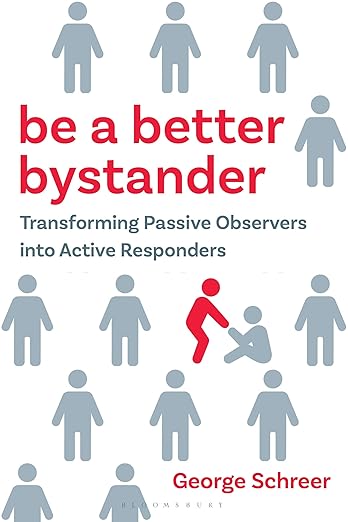
Be a Better Bystander: Transforming Passive Observers into Active Responders
Emergencies are, by definition, unpredictable and fast-moving situations that arise without warning and demand immediate attention. In many such moments, especially in contexts involving health crises, bullying, sexual misconduct, or incidents of bias and discrimination, bystanders are often the closest—and sometimes the only—people positioned to intervene. Yet despite their proximity, the most common response in these situations is inaction, shaped by uncertainty, fear, social pressure, or simply not knowing what to do.
Be a Better Bystander: Transforming Passive Observers Into Active Responders explores this critical gap between awareness and action. The book examines the psychological, social, and environmental barriers that prevent individuals from stepping in when help is needed. These barriers may include diffusion of responsibility, fear of misinterpretation, perceived risk, lack of confidence, or the assumption that someone else will intervene. By unpacking these factors, the book sheds light on why people so often remain passive even when they recognize that intervention is necessary.
Building on this foundation, the book offers a wide range of evidence-based strategies designed to empower individuals to act safely and effectively in moments of need. It provides practical tools for recognizing situations that require intervention, overcoming hesitation, and choosing appropriate forms of response. Rather than promoting a single approach, it presents a flexible toolkit of actions that can be adapted to different environments and levels of risk, helping readers move from passive observation to confident, informed engagement.
The book is especially relevant in institutional and community settings where bystander intervention can have a significant impact. It offers valuable guidance for educators, residence life staff, diversity and inclusion professionals, public health advocates, and community organizers working to create safer and more supportive environments. In these contexts, bystander behavior is not just an individual choice but a collective responsibility that can shape organizational culture and community well-being.
In addition, Be a Better Bystander serves as a useful supplementary text for academic courses in social psychology, health psychology, gender studies, women’s studies, and programs focused on bias, equity, and inclusion. Its accessible structure and applied focus make it suitable for both classroom learning and professional training.
Ultimately, the book aims to shift how people think about responsibility in critical moments. By equipping readers with knowledge, practical skills, and greater awareness of the barriers to action, it encourages a cultural shift toward proactive engagement—where more people feel prepared and empowered to step in, speak up, and support others when it matters most.




Reviews
There are no reviews yet.