


Description
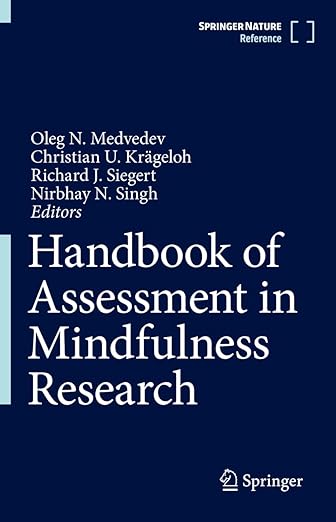
Handbook of Assessment in Mindfulness Research
This comprehensive handbook offers an in-depth exploration of the tools and methods used to measure mindfulness in psychological research and clinical practice. It brings together a wide range of assessment instruments and evaluates how they are developed, tested, and applied across different populations and contexts. Rather than focusing solely on individual scales, the book provides a broader understanding of the scientific principles that underpin mindfulness measurement and the evolving methods used to ensure accuracy and reliability.
The text examines both traditional and modern approaches to psychometric evaluation, including classical test theory, item response theory, the Rasch model, generalizability theory, facet-based benchmarking, and network analysis. By explaining these frameworks in an accessible and structured way, the handbook helps readers understand how researchers design measurement tools and assess their validity, consistency, and usefulness in real-world studies.
A key focus of the book is the development and application of mindfulness assessment tools across the lifespan. It presents detailed discussions of instruments designed for children, adolescents, and adults, highlighting how measurement approaches differ depending on age, cognitive development, and context. In addition, it explores specialized scales created for specific settings and research purposes, offering insight into how mindfulness is studied in both general and targeted environments.
The handbook also extends beyond self-report questionnaires to include behavioral, cognitive, and psychophysiological measures of mindfulness. It reviews how mindfulness can be assessed through observable behavior, mental performance tasks, and biological indicators such as physiological responses, providing a more complete and multidimensional view of how mindfulness is understood and evaluated in scientific research.
In addition, the book surveys a wide range of related psychological, physical health, and mental health measures commonly used in mindfulness studies. It shows how mindfulness research intersects with broader areas of well-being, stress, emotional regulation, and clinical outcomes, helping readers understand the full scope of measurement tools available in the field.
Key areas covered include:
- The theoretical foundations and nature of psychological assessment
- Historical origins and conceptual definitions of mindfulness
- Measurement scales designed for children and adolescents
- Assessment tools developed for adult populations
- Context-specific mindfulness instruments for specialized use cases
- Mindfulness measures rooted in Buddhist traditions and contemplative practices
- Behavioral methods for evaluating mindfulness
- Cognitive and psychophysiological approaches to mindfulness assessment
By bringing together this wide range of methods and perspectives, The Handbook of Assessment in Mindfulness Research serves as a vital reference for selecting appropriate measurement tools in diverse research settings. It supports the development of more rigorous, consistent, and meaningful studies in mindfulness science.
This volume is an indispensable resource for researchers, academics, and graduate students working in psychology and related disciplines. It is also highly relevant for clinicians, therapists, and healthcare professionals in fields such as clinical psychology, psychiatry, social work, occupational therapy, rehabilitation sciences, and complementary and integrative medicine. By bridging theory and practice, the handbook strengthens the scientific foundation of mindfulness research and supports its continued growth across both academic and clinical domains.


Reviews
There are no reviews yet.