


Description
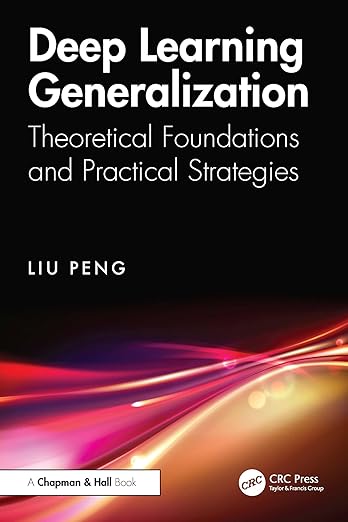
Deep Learning Generalization: Theoretical Foundations and Practical Strategies
Deep learning models have achieved remarkable success across fields ranging from computer vision and natural language processing to scientific computing and artificial intelligence. However, one of the greatest challenges in modern machine learning remains understanding and improving generalization—the ability of a model to perform accurately on new, unseen data. This book provides a comprehensive exploration of deep learning generalization, combining rigorous theoretical foundations with practical strategies for building models that are reliable, efficient, and capable of adapting beyond their training data.
Deep Learning Generalization: Theoretical Foundations and Practical Strategies examines the fundamental principles behind why machine learning models succeed or fail when applied to real-world situations. It explores how deep neural networks learn meaningful patterns, how they avoid simply memorizing training examples, and how researchers and practitioners can design systems that achieve stronger performance on unseen datasets.
The book covers essential topics such as managing model complexity, preventing overfitting and underfitting, and understanding advanced concepts that challenge traditional assumptions about learning theory. Readers will gain insight into modern phenomena such as the double descent curve, implicit regularization, overparameterization, and the surprising ways highly complex neural networks can still generalize effectively.
Taking a complete view of the learning process, the book analyzes the four major components that determine model performance:
- Data: Understanding data quality, distribution, sampling, and the role of datasets in successful generalization.
- Model Architecture: Exploring how neural network design choices influence learning ability, efficiency, and robustness.
- Objective Functions: Examining how loss functions and training goals shape what models learn.
- Optimization Processes: Understanding how training algorithms influence model behavior and final performance.
Alongside theoretical explanations, the book provides practical guidance for implementing generalization techniques using modern deep learning tools, including PyTorch. Through examples and hands-on approaches, readers learn how to translate mathematical concepts into real-world machine learning workflows.
The book also explores how regularization techniques improve deep learning models by encouraging more efficient and compact representations while maintaining strong predictive performance. From foundational ideas in statistical learning theory to advanced research areas such as Neural Tangent Kernels and the mysteries of overparameterized neural networks, the material is structured to support readers as they progress from basic concepts to cutting-edge developments.
By bringing together classical theories and modern discoveries, this book offers a complete perspective on one of the most important challenges in artificial intelligence: creating models that do not merely memorize data but truly understand and generalize.
For researchers and academics, this book provides a valuable reference for strengthening theoretical knowledge and exploring emerging research directions. For engineers, data scientists, and machine learning practitioners, it delivers practical insights for improving model reliability, performance, and scalability.
Whether you are learning deep learning fundamentals, developing production-level AI systems, or researching the future of machine intelligence, Deep Learning Generalization: Theoretical Foundations and Practical Strategies provides an essential guide to understanding, evaluating, and improving the ability of neural networks to generalize in the real world.

Reviews
There are no reviews yet.