

Description
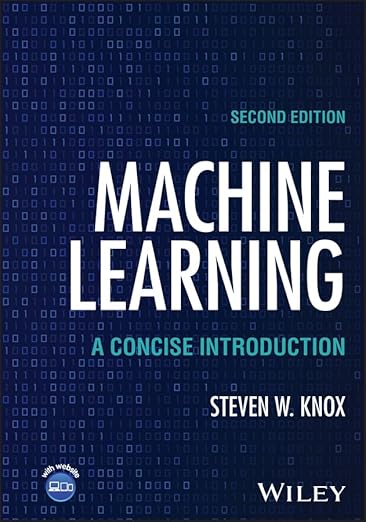
Machine Learning: A Concise Introduction
Machine Learning: A Concise Introduction — Core Concepts, Methods, and Applications
A newly updated edition of the acclaimed PROSE Award finalist, Machine Learning provides a comprehensive introduction to the fundamental principles, techniques, and real-world applications of machine learning. This revised edition incorporates the latest developments in the field and now includes side-by-side Python and R implementations to help readers connect theory with practical application.
Designed for students, researchers, and professionals, this book explains the essential concepts behind modern machine learning, including classification, regression, clustering, density estimation, and dimensionality reduction. It combines mathematical foundations with practical insights, helping readers understand not only how algorithms work but also why they are designed the way they are.
The book emphasizes the key principles that drive successful machine learning solutions, including the bias-variance trade-off and its role in developing effective models and ensemble techniques. Readers will also explore important topics such as optimization, risk assessment, model selection, handling biased datasets, and overcoming practical limitations in real-world machine learning projects.
Inside This Book, You’ll Learn:
- The core concepts, terminology, and techniques used in modern machine learning.
- How to solve applied problems involving classification, regression, clustering, and data reduction.
- The design principles behind machine learning algorithms and model development.
- How bias, variance, and model complexity influence machine learning performance.
- Methods for optimization, evaluation, and selecting the right model for a problem.
- How to handle imperfect data, limitations, and challenges in practical applications.
- Classification approaches including likelihood-based methods, prototype methods, neural networks, decision trees, and support vector machines.
Key Features:
- Uses a consistent example throughout the book to compare different classification methods and highlight their strengths and differences.
- Provides both Python and R source code examples for implementing and interpreting machine learning techniques.
- Includes exercises throughout the chapters to reinforce learning, along with selected solutions in an appendix.
- Offers guidance on communicating technical and ethical aspects of machine learning with clients and stakeholders.
- Covers updated developments and expanded explanations to improve understanding of modern approaches.
Part of the respected Wiley Series in Probability and Statistics, Machine Learning: A Concise Introduction is an essential resource for advanced undergraduate students, beginning graduate students, data scientists, machine learning practitioners, and professionals who want a strong foundation in the theory and practice of machine learning.
Combining rigorous concepts with practical examples, this book provides the knowledge needed to understand, build, and apply machine learning systems effectively.



Reviews
There are no reviews yet.