

Description
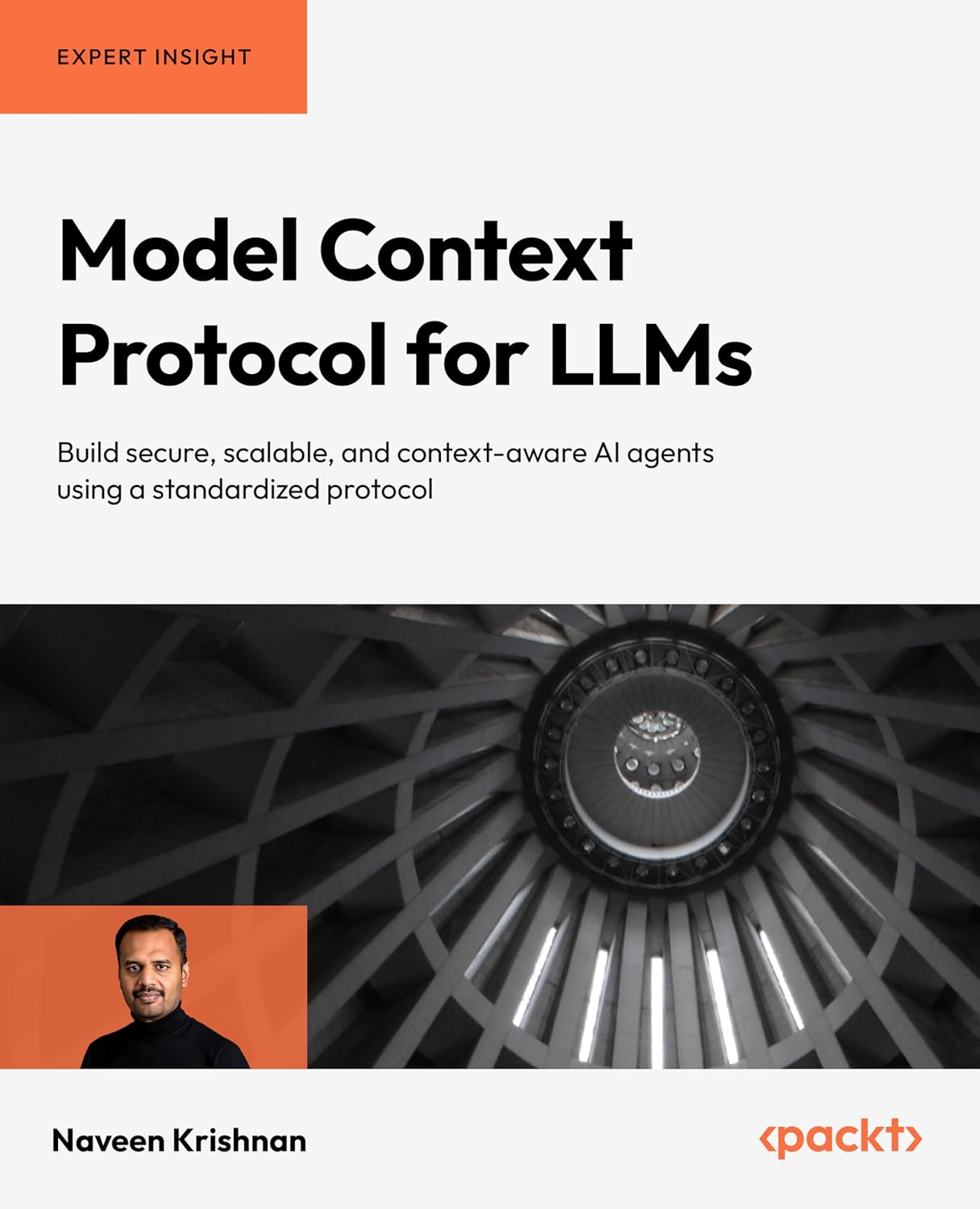
Build reliable, scalable, and secure large language model (LLM) applications using the Model Context Protocol (MCP). This practical guide shows you how to create modular, context-aware AI agents and deploy advanced multi-agent systems designed for real-world production environments.
Free with your book: Receive a DRM-free PDF edition and access to Packt’s next-generation Reader platform.*
Key Features
- Build flexible, production-ready AI agents with the Model Context Protocol (MCP).
- Combine MCP with frameworks such as LangChain, AutoGen, and Retrieval-Augmented Generation (RAG) for intelligent multi-agent collaboration.
- Implement security, optimization, testing, and evaluation techniques for dependable AI deployments.
Book Description
Many modern LLM applications struggle with inconsistent context handling, unreliable tool connections, and inefficient coordination between AI agents. This book provides a practical approach to overcoming these limitations by introducing the Model Context Protocol (MCP)—an open framework designed to create interoperable, scalable, and maintainable AI architectures.
You’ll discover why effective context management is a critical missing component in many AI systems and how MCP provides a structured solution. Through practical examples and implementation guidance, you’ll learn how to build reusable AI components, including resource providers, tool providers, gateways, and standardized communication interfaces.
The book also demonstrates how to connect MCP with popular AI development frameworks such as LangChain, AutoGen, and RAG pipelines to create collaborative AI agents capable of sharing context and working together effectively. You’ll explore how MCP can power advanced applications including multimodal AI systems, personalized experiences, and enterprise knowledge management platforms.
Beyond development, you’ll learn how to prepare MCP-based solutions for production by applying authentication, authorization, performance optimization, benchmarking, and cloud deployment strategies. The book combines architectural concepts with practical implementation techniques to help you design secure and reusable LLM systems that can scale with confidence.
Written by an experienced data and AI solutions engineer with more than 17 years of experience working with Microsoft and Fortune 500 companies, this guide delivers both strategic insights and hands-on expertise for building next-generation AI applications.
By the end of this book, you’ll be able to design, implement, secure, and deploy MCP-powered LLM systems ready for real-world use.
Email registration and proof of purchase required.
What You Will Learn
- Understand the core architecture, components, and principles of the Model Context Protocol.
- Build resource and tool providers using Python.
- Integrate MCP workflows with LangChain and AutoGen.
- Secure AI agent communication using authentication and access-control techniques.
- Combine MCP with RAG pipelines and shared contextual memory.
- Apply TLS, identity management, and authorization models for secure deployments.
- Improve application performance using caching and asynchronous programming patterns.
- Test, evaluate, and benchmark MCP systems for production environments.
- Design scalable multi-agent architectures for enterprise applications.
Who This Book Is For
This book is ideal for AI/ML engineers, software developers, solution architects, cloud architects, and platform engineers who are building LLM-powered applications for production use.
It is especially useful for professionals seeking a standardized, modular, and secure method for managing context between AI agents, tools, and data sources. Readers should have intermediate Python experience, a basic understanding of LLM concepts, familiarity with REST APIs, and knowledge of common software architecture patterns.
Table of Contents
- Introduction to the Model Context Protocol
- Foundations of Multi-Agent Systems
- Understanding MCP for Non-Technical Readers
- MCP Components and Interfaces
- MCP Architecture Overview
- Building MCP Server-Side Implementations
- Client-Side MCP Integration
- Understanding the MCP Security Model
- Improving MCP Performance and Scalability
- MCP and Multi-Agent AI Systems
- MCP for Retrieval-Augmented Generation
- Integrating MCP with LangChain
- Integrating MCP with AutoGen
- MCP Applications in Enterprise Knowledge Management
- MCP for Personalization and Recommendation Systems
Use the Read Sample option to explore additional chapters and examples.

Reviews
There are no reviews yet.