

Description
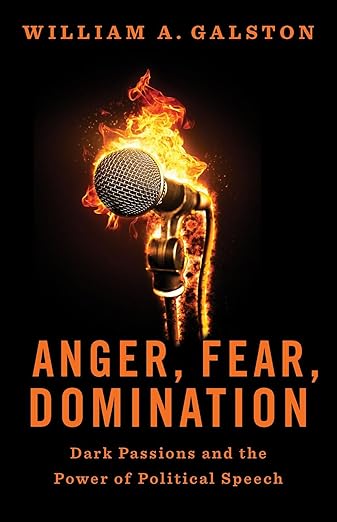
Anger, Fear, Domination: Dark Passions and the Power of Political Speech
In this compelling examination of modern politics, renowned political theorist William A. Galston explores the powerful emotional forces that increasingly shape democratic societies. At a time when political polarization, populism, and authoritarian movements are gaining momentum across the world, he argues that understanding these darker aspects of human nature is essential for protecting the future of liberal democracy.
For generations, liberal democratic thought has largely rested on the belief that people are guided by rational self-interest, moderated by civic virtues such as empathy, patriotism, cooperation, and a willingness to place the common good above personal gain. While these principles remain fundamental to democratic life, Galston contends that they offer only part of the picture. Recent political developments reveal that reason and goodwill alone are often insufficient to explain how people think, feel, and act during periods of uncertainty and social upheaval.
The book examines the emotional currents that frequently lie beneath political behavior—fear, humiliation, anger, resentment, hatred, and the desire for power and domination. Rather than dismissing these emotions as irrational exceptions, Galston argues that they are enduring features of human psychology that become especially influential during times of economic instability, cultural conflict, or perceived national decline. In moments of crisis, these powerful emotions can motivate individuals more effectively than reasoned arguments, influencing everything from voting behavior and public opinion to mass protest and political violence.
Drawing on political theory, history, psychology, and contemporary events, the author demonstrates how democratic institutions have long been designed not only to organize government but also to restrain these destructive impulses. Constitutions, the rule of law, representative government, and civil liberties all serve as safeguards against the concentration of power and the manipulation of public emotion. Yet these institutional protections are increasingly being challenged by a new generation of charismatic leaders and populist movements that exploit fear, resentment, and social division for political gain.
Galston argues that defending liberal democracy requires far more than improved public policy or economic reform. While responsive governance remains essential, it must be accompanied by persuasive political leadership, effective public communication, and a more realistic understanding of political psychology. Democracies cannot afford to assume that facts alone will overcome misinformation, or that appeals to empathy and solidarity will always prevail over anger and resentment. Instead, political leaders must recognize the emotional dimensions of public life and respond to them thoughtfully, responsibly, and honestly.
Throughout the book, Galston offers a nuanced framework for understanding why democratic societies have become increasingly vulnerable to polarization and authoritarian tendencies. He challenges readers to reconsider long-held assumptions about rational politics while emphasizing the importance of preserving institutions capable of balancing freedom, stability, and human dignity.
Insightful, timely, and deeply thought-provoking, this book provides an essential guide to the emotional forces shaping contemporary political life. It offers readers a richer understanding of the challenges facing liberal democracy today and presents a compelling case for why safeguarding democratic institutions requires not only sound policies, but also a realistic appreciation of the passions that drive human political behavior.



Reviews
There are no reviews yet.