
Description
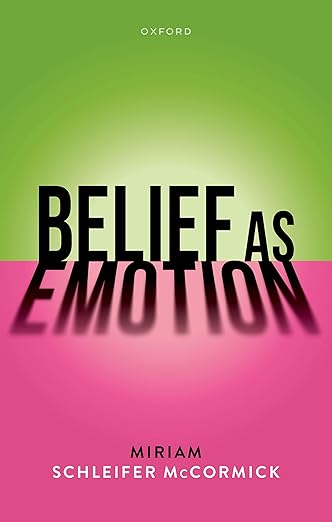
Belief as Emotion presents a bold and original perspective on one of philosophy’s oldest questions: What does it really mean to believe something? Rather than treating belief as a purely rational or cognitive process, the book argues that belief is fundamentally a form of emotion. It proposes that beliefs are complex mental states that naturally combine thought, feeling, motivation, and personal experience, challenging the traditional divide between reason and emotion.
According to this perspective, believing something is not simply accepting a fact as true—it is experiencing a deep sense that one’s understanding of the world is accurate. This feeling represents a form of evaluation, shaping how people interpret information, make decisions, and interact with others. By redefining belief in this way, the book offers fresh insights into longstanding debates across epistemology, philosophy of mind, philosophy of action, and philosophy of religion.
The emotional theory of belief also provides a compelling explanation for many difficult cases that conventional theories struggle to address. It explores beliefs that blur the boundaries of rational thought, including delusions, political and religious convictions, and the beliefs that develop through trust and personal relationships. While many philosophers argue that these attitudes should be classified as something other than genuine beliefs because of their complex relationship with evidence and behavior, this book contends that they remain authentic beliefs and deserve to be understood within a broader and more realistic framework.
By embracing the emotional dimensions of belief, the author sheds new light on important psychological and philosophical phenomena such as self-deception, implicit bias, deeply rooted disagreements, and the ways people maintain or revise their convictions over time. Rather than forcing these experiences into narrow theoretical categories, the book recognizes the richness and complexity of human belief, acknowledging that our convictions are shaped by far more than logic alone.
Thought-provoking and deeply interdisciplinary, Belief as Emotion challenges readers to rethink the relationship between emotion, reason, and knowledge. It offers a fresh framework for understanding how beliefs are formed, sustained, and changed, while also contributing valuable insights into the ethics of belief, human judgment, and the emotional foundations of our intellectual lives.


Reviews
There are no reviews yet.