


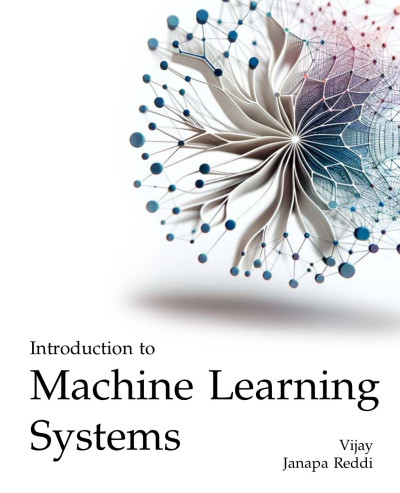
Description
Engineering Modern Machine Learning Systems from Theory to Real-World Deployment
This comprehensive textbook offers a structured approach to understanding, designing, and building machine learning (ML) systems. It connects the fundamental ideas behind artificial intelligence with the practical engineering methods required to create reliable, scalable, and efficient ML solutions.
Rather than focusing only on algorithms and model architectures, this book takes a broader systems-level approach. It explores the complete environment where machine learning operates, including data pipelines, software frameworks, hardware infrastructure, model efficiency, optimization techniques, and accelerated inference.
Readers will learn how to think like ML systems engineers—developing the ability to analyze complex architectures, make informed engineering decisions, and build flexible systems capable of adapting to real-world demands.
Moving from core concepts to practical implementation, the book guides readers through every stage of the machine learning lifecycle.
What You’ll Learn
1. Understand the Foundations of ML Systems
Build a strong conceptual understanding of machine learning systems, explore the relationship between hardware and software layers, and develop familiarity with essential architectures, design patterns, and mathematical principles.
2. Design Complete Machine Learning Workflows
Learn how to create end-to-end ML pipelines, solve data engineering challenges, choose effective tools and frameworks, and manage large-scale model training processes.
3. Improve Performance and Efficiency
Discover techniques for making ML systems faster, more lightweight, and cost-effective through model compression, optimization strategies, hardware acceleration, and performance evaluation.
4. Develop Production-Ready Solutions
Explore the practical challenges involved in deploying machine learning systems, including reliability, security, privacy protection, monitoring, and long-term system maintenance.
5. Create Responsible and Trustworthy AI Systems
Understand the broader impact of machine learning technology and learn how to apply ethical AI practices, responsible design principles, and approaches that benefit users and society.
6. Explore Emerging ML Technologies
Examine new developments in the field, prepare for future trends, and develop the critical thinking skills needed to evaluate evolving machine learning technologies.
By combining theoretical knowledge with practical engineering principles, this book provides students, researchers, software engineers, and AI practitioners with the skills needed to design and build modern machine learning systems that are efficient, reliable, scalable, and ready for real-world applications.


Reviews
There are no reviews yet.