

Description
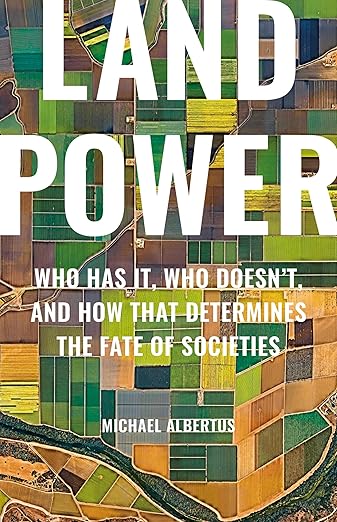
Land Power: Who Has It, Who Doesn’t, and How That Determines the Fate of Societies.
An award-winning political scientist reveals how land ownership shapes inequality, prosperity, and the future of our planet.
“Fascinating…a must-read.” — Thomas Piketty, New York Times bestselling author of Capital in the Twenty-First Century
Named a New Yorker Best Book of the Year, Land Power explores one of the most influential forces in human history: who controls the land and how that control determines the direction of societies.
For centuries, land has represented wealth, status, and political power. But as political scientist Michael Albertus reveals, land ownership has consequences far beyond economics. The way land is distributed can shape whether communities become more equal or divided, whether nations thrive or struggle, and whether environmental resources are protected or exploited.
Throughout modern history, governments and ruling groups have repeatedly transformed societies by redistributing land. From European colonial expansion and the displacement of Indigenous communities to twentieth-century collectivization movements and land reforms designed to empower small farmers, decisions about ownership have shaped the social and political landscape of nations around the world.
Today, struggles over land continue as governments seek economic growth, political influence, and control over resources. Drawing on years of research and fieldwork across the globe, Albertus demonstrates how land policies have contributed to persistent inequality, discrimination, poverty, and environmental challenges.
With a sweeping international perspective, Land Power shows that the future of civilization depends on how we understand, manage, and share the most fundamental resource on Earth: the land beneath our feet.




Reviews
There are no reviews yet.