


Description
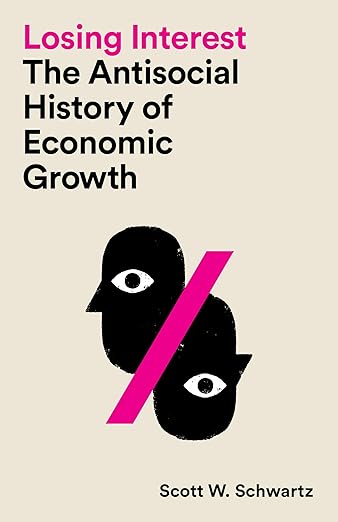
Losing Interest: The Antisocial History of Economic Growth
Why has endless economic growth come to be treated as an unquestionable goal? Losing Interest challenges one of the defining assumptions of the modern economy by exploring how profit, interest, and capital became the dominant forces shaping society.
For much of human history, cultures around the world viewed unlimited wealth accumulation with skepticism, placing ethical and social limits on lending, profit-making, and the pursuit of financial gain. Charging interest was often condemned as exploitative, while economic activity was expected to serve the broader community rather than private enrichment. So how did these once-controversial ideas become the foundation of today’s global economic system?
Drawing on history, anthropology, and political economy, Scott W. Schwartz traces the centuries-long transformation of interest from a moral concern into a cornerstone of modern finance. From the rise of Renaissance banking to the expansion of European colonial empires and the financial institutions that supported them, the book examines how legal and economic innovations reshaped attitudes toward wealth, investment, and ownership.
Schwartz argues that many of the structures underpinning contemporary capitalism emerged alongside systems of conquest, slavery, and colonial expansion, allowing financial capital to become increasingly detached from the human costs that made its growth possible. By placing these developments within their historical context, he invites readers to reconsider long-held assumptions about markets, profit, and economic progress.
Blending accessible storytelling with thoughtful analysis, Losing Interest offers a provocative examination of the origins of modern capitalism and the enduring influence of interest-based finance. Engaging with themes that resonate throughout today’s debates on inequality, sustainability, and economic reform, the book provides valuable historical perspective for readers interested in alternative visions of prosperity and the future of the global economy.
Losing Interest: The Antisocial History of Economic Growth


Reviews
There are no reviews yet.