
Description
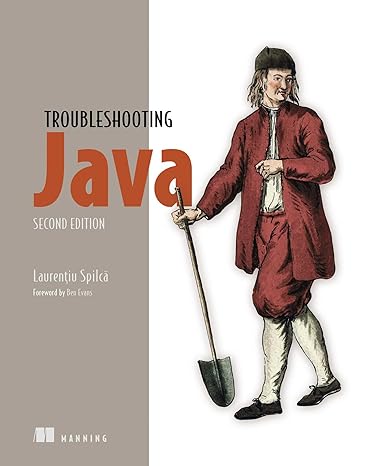
Troubleshooting Java, Second Edition.
Master the skills needed to analyze, debug, and optimize Java applications with confidence using proven techniques, modern tools, and AI-assisted workflows.
Debugging, maintaining legacy systems, and understanding unfamiliar code are among the most time-consuming challenges developers face. Troubleshooting Java, Second Edition provides a practical, hands-on approach to diagnosing problems, improving application performance, and understanding how Java programs behave in real-world environments. Whether you’re working with existing codebases or AI-generated applications, this guide equips you with the techniques needed to identify issues quickly and resolve them effectively.
Inside this updated edition, you’ll learn how to:
- Use modern debugging tools to understand complex application logic
- Leverage AI-powered utilities to analyze logs, trace execution paths, and identify potential issues faster
- Design meaningful logging strategies and interpret application logs efficiently
- Detect performance bottlenecks and optimize slow-running code
- Analyze SQL queries to improve database performance
- Investigate memory leaks through heap dump analysis
- Diagnose deadlocks, thread contention, and concurrency problems using thread dumps
- Troubleshoot distributed applications, cloud-native systems, and microservices architectures
Drawing on years of experience building and maintaining enterprise Java applications, author Laurentiu Spilca presents practical debugging and performance-tuning techniques that developers can immediately apply. This fully revised second edition introduces updated Java tooling, modern JVM diagnostics, and AI-assisted troubleshooting methods while expanding coverage of cloud-based and service-oriented applications.
You’ll gain hands-on experience with industry-standard tools such as IntelliJ IDEA Debugger, VisualVM, Heap Dump Analyzer, and JVM monitoring utilities, learning how to uncover hidden dependencies, investigate crashes, resolve memory issues, and improve application reliability. Although the examples use Java, the diagnostic principles and troubleshooting strategies are applicable across JVM-based languages.
Designed for intermediate Java developers, this book combines practical examples with real-world scenarios to help you build confidence in debugging, profiling, and optimizing production applications. From understanding application behavior to solving complex performance and concurrency issues, it serves as a comprehensive guide to keeping Java systems fast, stable, and maintainable.
Topics covered include:
- Modern Java debugging techniques
- Advanced debugging and root-cause analysis
- Logging strategies and application auditing
- Performance profiling and optimization
- Thread analysis and deadlock investigation
- Memory management, heap dumps, and garbage collection logs
- Troubleshooting distributed systems and service communication
- Transaction management and data consistency
- Essential Java diagnostic tools and recommended resources


Reviews
There are no reviews yet.